
The Multifaceted Love Of Our Cars
The Love Of Our Cars: Exploring Practicality, Emotion And Identity. Cars have long been more than just machines that transport
The Multifaceted Love Of Our Cars Read More »

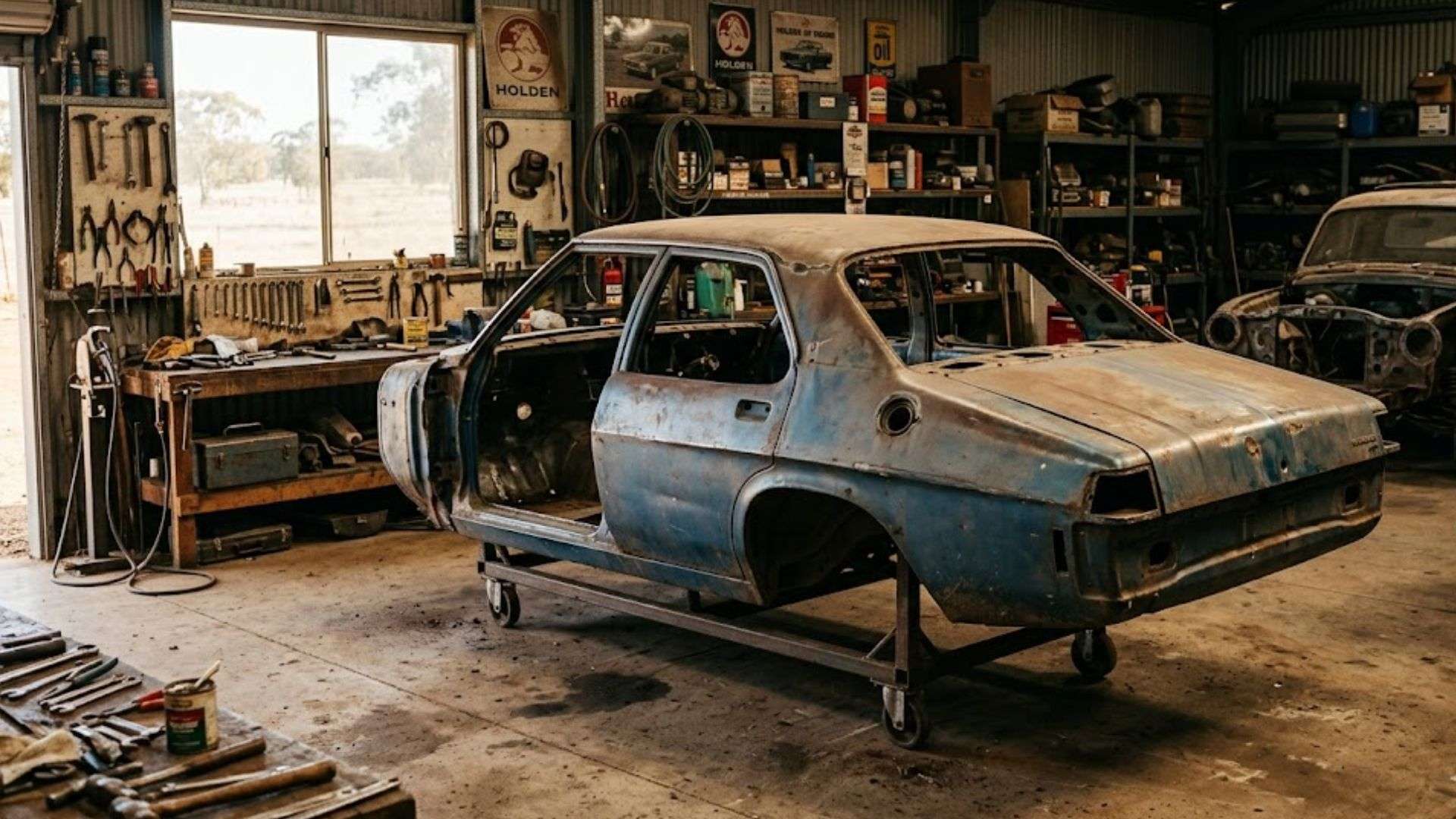
Industrial storytelling in the Australian automotive world has a way of settling into people before they realise it.
It sits in the background like the hum of an engine at idle, steady and familiar, shaping how we think about cars even when we’re only half aware of it. You sometimes find that a single detail from a workshop or a factory floor can stay with someone longer than the car itself.
That’s the quiet power of these stories. They help people understand why vehicles matter beyond their mechanical purpose.
The weight of a factory floor.
There’s a particular sound that lingers in the memory of anyone who has ever walked through a manufacturing plant.
A rhythmic clatter from stamping presses. The faint metallic smell that hangs in the air. Even people who never set foot in those places still feel the echoes of that world through the cars that came out of them.
When you run your hand along the crease of an old Falcon guard or notice the slightly uneven texture on a Kingswood dash pad you’re touching the outcome of thousands of small human decisions.
Industrial storytelling often begins with these physical cues. A slight variation in panel gap on an older Holden. The way the paint on a 70s ute softens under decades of Australian sun.
These details remind people that cars were shaped by real hands not just machines. It’s a counterintuitive thing in a way because modern manufacturing is far more precise yet many drivers feel a stronger emotional pull toward the imperfections of older vehicles. Those imperfections make the story feel lived in.
There’s a trade off here. Older craftsmanship brings charm and character although it also brings quirks that require patience. A door that needs a firmer push. A window winder that feels a bit gritty after years of dust.
These aren’t faults so much as they are reminders of the era they came from.
Characters behind the steel.
Industrial storytelling isn’t only about the cars. It’s about the people who shaped them. Toolmakers who could read steel by sound.
Assembly workers who could spot a misaligned bracket from ten metres away. Designers who sketched lines that somehow captured the Australian landscape without ever saying so.
You can still see their influence in the way certain vehicles sit on the road. A Sandman panel van with its long, easy stance.
A Falcon GT with that slightly aggressive nose that seems to lean into the wind. These shapes didn’t appear out of nowhere.
They came from people who understood how Australians drove long distances on coarse chip bitumen or how a family car needed to feel stable when loaded with camping gear.
A small observation that often surprises people is how much of a vehicle’s personality comes from ergonomics rather than styling.
The angle of a seat base. The thickness of a steering wheel rim. The reach to the gear lever. These choices were made by teams who spent hours watching how different body shapes interacted with the cabin.
It’s easy to overlook until you sit in a car that doesn’t quite fit you and suddenly every drive feels slightly off.
There’s a limitation here too. Ergonomics from past decades don’t always suit modern expectations. Taller drivers sometimes find older cabins cramped. Shorter drivers may struggle with pedal reach.
Yet these quirks become part of the story rather than a flaw.
The emotional weight of the last line.
Many Australians remember the moment the final locally built Commodore rolled off the line. Even people who never owned one felt something shift.
It wasn’t just the end of a model. It was the closing of a chapter that had shaped families, towns and entire regions.
You can still see the emotional residue of that moment in car meets around the country. Someone polishing the chrome on a restored Kingswood.
A young driver learning to double check coolant levels on a hand me down Falcon because the old alloy head doesn’t love summer heat. These small acts of care become a way of keeping the story alive.
A physical cue that often triggers these memories is the sound of an older six or V8 at cold start. There’s a slight shudder through the body.
A deep note that settles into a steady rhythm. It’s not just noise. It’s a reminder of an era when engines had a particular character shaped by local fuel quality, local tuning practices and the realities of Australian heat.
The counterintuitive part is that even people who prefer modern cars with their quiet cabins and efficient drivetrains still feel drawn to these older sounds. It’s not about performance. It’s about connection.
Restoration as modern craftsmanship.
Industrial storytelling continues long after factories close. You see it in sheds across the country where people restore old utes or rebuild engines on weekends. Many of these restorers never worked in manufacturing yet they carry the same respect for materials and process.
A common physical cue in restoration work is the feel of old fasteners.
Some loosen with a gentle crack while others resist with a stubbornness that tells you they’ve been heat cycled thousands of times.
These small tactile moments remind people that vehicles age in layers. Dust from gravel roads. UV fading on interior plastics. Slight surface rust where condensation settled overnight.
Restoration also reveals a practical trade off. Keeping an older vehicle running can be deeply satisfying although it can also be time consuming. Parts availability varies.
Some components need machining rather than replacement. Yet many Australians find meaning in that effort because it connects them to a broader story of ingenuity and persistence.
A tangential observation here is how often people discover forgotten items inside old cars.
A faded service receipt. A lost coin. A handwritten note under a seat rail. These fragments add texture to the story even though they have nothing to do with mechanical function.
Modern technology meeting old shells.
There’s a growing interest in blending classic Australian bodies with modern drivetrains including EV conversions. It’s a way of preserving the shape and character of older vehicles while adapting them to contemporary expectations. Some people find it surprising that a heavy old sedan can feel remarkably smooth with an electric motor because the torque delivery suits the weight distribution.
A physical cue that stands out in these conversions is the silence at low speed. You roll forward and hear only tyre noise on the road surface.
It changes the emotional tone of the vehicle. Some drivers love the calmness. Others miss the mechanical soundtrack. Both reactions are valid because ergonomics and sensory feedback shape how people relate to their cars.
There’s a limitation worth acknowledging. EV conversions can be expensive and technically complex.
Battery placement affects balance. Cooling systems need careful planning. Yet the appeal remains because it allows people to carry the story forward rather than letting it fade.
Car clubs as living archives.
Walk through a local car club meet and you’ll see industrial storytelling in motion. People leaning over bonnets discussing the feel of a clutch pedal.
Someone pointing out the slight waviness in a panel that came from a factory press nearing the end of its life. These observations keep the heritage alive in a way that museums alone can’t.
A physical cue that often sparks conversation is the smell of older interiors. Vinyl warmed by the sun. A hint of fuel vapour from a carburetted engine. These scents anchor memories more strongly than people expect.
The counterintuitive part is that younger drivers often connect with these stories just as strongly as older enthusiasts.
They weren’t around when these cars were new yet they recognise the authenticity in them. It’s a reminder that industrial storytelling isn’t nostalgia. It’s continuity.
A practical trade off appears here too. Club culture can be welcoming although it can also feel intimidating for newcomers who worry they don’t know enough. Most groups are far more relaxed than they seem. People appreciate curiosity more than expertise.
Why these stories still matter.
Industrial storytelling helps Australians understand why vehicles hold such a strong place in our culture.
It explains why someone might spend months tracking down the correct trim piece for a 1970s ute or why a learner driver feels proud when they finally understand the rhythm of a manual gearbox.
These stories give context to the physical world of cars.
They also remind us that vehicles are more than transport. They’re part of how people navigate distance, identity and memory in a country where roads stretch far and conditions vary wildly.
A car that handles corrugated gravel without fuss becomes part of someone’s sense of reliability. A vehicle that overheats on a summer climb teaches a lesson about mechanical sympathy.
Industrial storytelling isn’t about looking backward. It’s about carrying forward the ingenuity and care that shaped Australian automotive history.
It helps people appreciate the machines they drive today and the ones they hope to preserve for tomorrow.
Closing reflections.
Industrial storytelling gives the automotive world its depth. It turns metal into memory and design into identity.
When people notice the small cues in their vehicles they’re participating in a tradition that stretches across generations.
It’s a quiet reminder that every car carries a story and every driver adds their own chapter simply by paying attention.
The Love Of Our Cars: Exploring Practicality, Emotion And Identity. Cars have long been more than just machines that transport
The Multifaceted Love Of Our Cars Read More »

Disclaimer: The content of this article reflects the author’s personal views, thoughts, and ideas only. It is provided for general
A Comprehensive Guide to Car Headlights Read More »

Disclaimer: The content of this article reflects the author’s personal views, thoughts, and ideas only. It is provided for general
23 Best Old Vehicles To Restomod Read More »

Disclaimer: The content of this article reflects the author’s personal views, thoughts, and ideas only. It is provided for general
Evolution of Car Stereo Systems Read More »