Industry Reform
The moment remains vivid for many Australians. A factory floor settling into an unfamiliar quiet as a final locally built V8 eased forward under the lights.
Polished panels reflected the faces of those who had spent years shaping metal into meaning while the faint smell of warm oil lingered in a space that had always been loud.
It marked the end of one era although it also hinted at the beginning of another. Industrial reform rarely begins with a declaration.
More often it starts with a pause that becomes noticeable through small physical details rather than sweeping announcements.
Reform revealed through everyday cues.
Reform seldom arrives with fanfare. It reveals itself in cues that drivers register without always naming.
A hybrid ute sitting quietly at a job site with only a faint electrical hum where a steady exhaust note once lived.
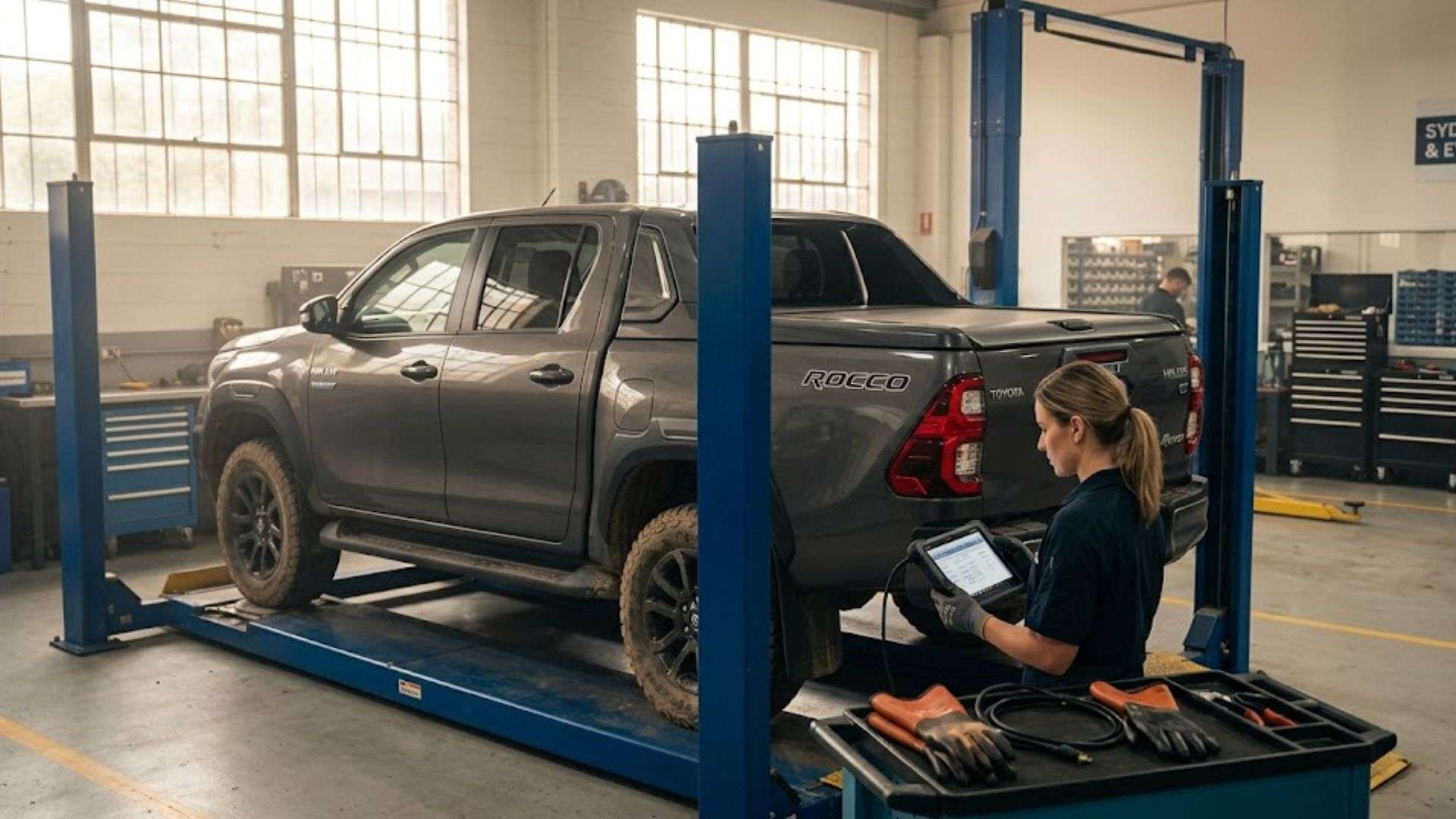
A service bay where coolant levels and battery temperatures sit side by side on a technician’s checklist.
A dashboard that blends analogue dials with a subtle energy flow display. These details make the change feel steady rather than abrupt.
A physical cue that stands out is the faint shift in vibration through the steering wheel when a hybrid transitions from electric assistance to petrol power. It is not a loss of mechanical character. It is a redistribution of it.
Some drivers might find the sensation oddly familiar because it echoes the smoothness of older six cylinder engines at low speeds.
A counterintuitive observation is that hybrids often feel more natural to long time drivers than some modern turbocharged engines.
The torque delivery is gentle and predictable. The limitation is that hybrid battery cooling systems can be sensitive to dust.
On gravel roads airflow around the front bumper becomes something to watch. That is a practical trade off that sits quietly inside the broader reform.
A small tangential detail is how many drivers still tap the bonnet after a long trip to gauge heat. In a hybrid the warmth reflects a different balance of systems although the instinct remains unchanged.
Continuity hidden inside change.
Industrial reform is often framed as a break from the past. Look more closely and it resembles a continuation of long standing instincts.
Ingenuity. Practicality. Adaptation to harsh conditions. These qualities do not disappear. They migrate into new forms.
A physical cue that captures this continuity is the brake pedal feel in a hybrid. Regenerative braking creates a slight firmness at the top of the pedal stroke. Drivers accustomed to older hydraulic systems often find the sensation unexpectedly familiar. The ergonomics evolve although the underlying feedback remains grounded.
A counterintuitive insight is that hybrids often encourage smoother driving. Gentle acceleration and steady cruising are rewarded with better efficiency. Many drivers adjust unconsciously.
Reform shapes behaviour quietly rather than forcefully.
The limitation is possibly weight. Hybrids are typically heavier than equivalent petrol vehicles.
You might feel that during tight manoeuvres or sharp turns where the body leans a touch more than expected.
It is not a flaw. It is a reminder that efficiency gains often arrive with physical compromises. A small tangential observation is how some drivers still rest a hand on the gear selector even though hybrids often use simplified shift mechanisms. Old habits persist because they feel right.
Workshops reshaped rather than replaced.
Workshops reflect a similar blend of continuity and change. The smell of rubber and coolant persists.
The sharp crack of rattle guns still echoes off the walls. Yet diagnostic screens now glow where timing lights once dominated. The workshop is not replaced. It is reshaped.
A physical cue that signals reform is the presence of insulated gloves hanging near the hybrid service bay.
They are not used often although their presence marks a shift in safety practices. Most tasks remain familiar. Oil changes. Suspension checks. Brake servicing. These are now layered with battery diagnostics and system checks.
A plain language explanation helps here. Hybrids use a planetary gearset to blend power from the engine and electric motor.
It is a simple and elegant system that reduces wear on traditional components. Drivers notice this as smoother acceleration and fewer perceptible gear changes.
The system is robust provided fluids remain clean and cooling systems function effectively.
A counterintuitive detail is that hybrid engines often run cooler than traditional petrol engines during city driving because the electric motor handles much of the low speed load.
The limitation is potentially that battery packs prefer moderate temperatures. Sustained heat can shorten their lifespan.
In Australian summers small habits like seeking shade or allowing the cabin to cool before extended driving can make a measurable difference.
A tangential observation is how quiet a workshop becomes when a hybrid rolls in. Without engine noise the crunch of tyres on concrete becomes more noticeable. It changes the rhythm of the space in a subtle way.
Regional realities shaping the pace of reform.
Reform does not unfold evenly across Australia. Regional conditions shape both adoption and performance. Long distances. High heat. Rough surfaces.
Persistent dust. These realities influence how hybrids behave and how drivers respond to them.
A physical cue that regional drivers notice is the way a hybrid’s petrol engine engages more consistently on long climbs.
The transition is felt as a gentle vibration through the seat. The system prioritises balance rather than outright force.
A counterintuitive outcome is that the additional weight of a battery pack lowers the centre of gravity which can improve stability on corrugated roads.
The limitation is ground clearance. Some hybrids sit lower than traditional utes which means greater care around ruts and washouts.
A tangential note is how many regional drivers still keep a paper map in the glovebox even with modern navigation.
Reliability is earned over time not assumed.
Heritage guiding the direction of reform.
Australian automotive heritage is not confined to museums. It persists in how vehicles are judged. By their stance. Their behaviour on uneven driveways. Their response under load.
Reform succeeds when it engages with this lived understanding rather than disregarding it. A physical cue that connects past and present is the steering feel of a hybrid ute.
Electric power steering systems are often tuned to replicate the weight and feedback of older hydraulic setups.
The result is not identical although it reflects a familiar intention. Maintaining connection rather than introducing detachment.
A counterintuitive insight is that hybrids often reinforce mechanical sympathy. Their smoother torque delivery places less stress on driveline components. Drivers who grew up feathering the throttle on older cars find the hybrid’s response surprisingly natural.
The limitation is towing capacity. While adequate in many cases it does not always match that of larger diesel platforms.
As vehicles become more software managed periodic updates and diagnostics become part of ownership. The spanner remains essential although it now shares space with new tools.
A tangential detail is how many people still judge a vehicle by the sound of its door closing. Hybrids vary widely in this regard. Some have a solid thud. Others a lighter click. Both tell a story about design priorities.
Reform as recasting rather than replacing.
Industrial reform in the automotive sector is less about replacement than recasting. The materials evolve although the underlying purpose remains.
Vehicles must endure heat, distance and unpredictability. Hybrids act as a bridge rather than a destination.
They integrate established mechanical principles with newer energy systems allowing change to occur without abrupt dislocation.
A physical cue that captures this idea is the feel of the accelerator pedal. In a hybrid the initial travel is often softer because the electric motor responds instantly. It encourages smoother driving and reflects a shift in engineering priorities toward efficiency and longevity.
A counterintuitive detail is that hybrids often feel more mechanically honest than some modern turbocharged engines. The power delivery is linear.
The transitions are predictable. Drivers sense this as a kind of calmness.
The limitation is that hybrids rely on software to manage their systems. That means occasional updates and diagnostic checks.
Yet the mechanical heart of the vehicle remains accessible. Reform does not remove the spanner from the equation. It simply adds a few more tools to the kit. Perhaps a tangential observation is how many people still keep a tyre pressure gauge in cab somewhere. Technology changes although trust in simple tools remains.
Closing reflections.
Industrial reform in Australia’s automotive world is not about losing the past. It is about carrying its spirit into new machinery.
Hybrids offer a bridge between eras. They blend mechanical familiarity with modern efficiency. They suit the rhythms of Australian roads without demanding a break from tradition.
Reform becomes a way of honouring the ingenuity and resilience that shaped the industry in the first place.